
In today’s digital world, converting images into editable content is becoming increasingly important. This is where a JPG to Text multi-language tool comes into play. Such tools allow users to extract text from images, making it easier to work with documents, notes, receipts, and more.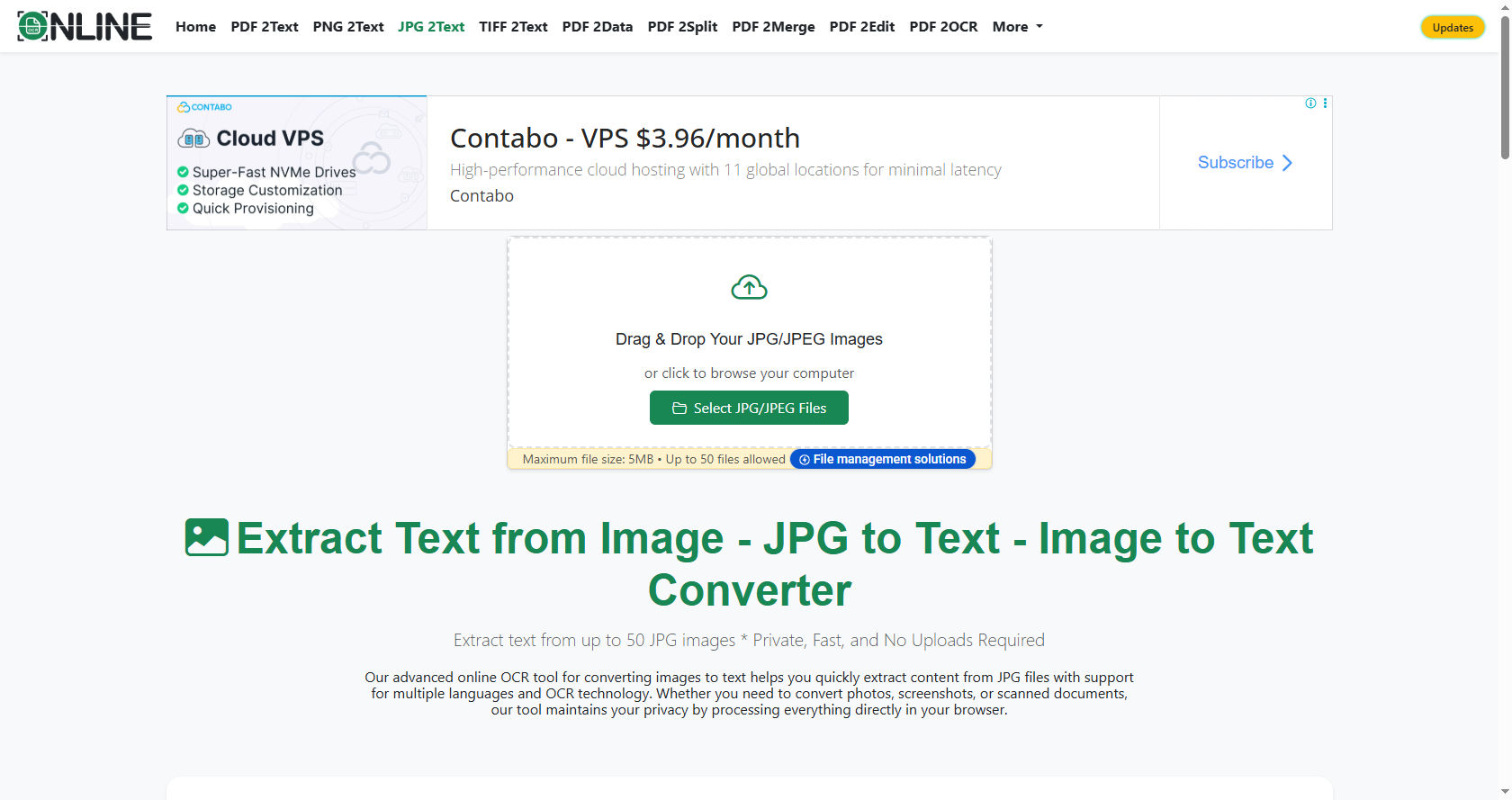
Whether you are a student, professional, or content creator, the ability to transform JPG files into text can save you a lot of time and effort.
A JPG to Text tool is especially useful when dealing with multi-language documents. Global communication often involves different languages, and manually typing text from an image can be tedious.
With the right tool, you can quickly extract text from JPG images in multiple languages, which improves productivity and accessibility.
This guide will explore the advantages, features, and practical uses of JPG to Text tools. We will also provide tips on choosing the right tool and explain why multi-language support is crucial in today’s digital environment.
How JPG to Text Works
At its core, a JPG to Text tool relies on Optical Character Recognition (OCR) technology. OCR analyzes the pixels in an image to identify patterns that correspond to letters, numbers, and symbols. Once the text is recognized, the software converts it into editable formats such as Word, PDF, or plain text.
The process is straightforward. First, you upload a JPG image containing the text you want to extract. The tool then scans the image and detects characters, even if the text is in a complex font or layout. Finally, it outputs the text in a format that you can edit, save, or share.
Modern JPG to Text tools are highly accurate, supporting various languages and fonts. This multi-language capability is vital for users who work with international documents or academic materials in foreign languages.
Why Multi-Language Support Matters
Multi-language support is one of the most important features of any JPG to Text tool. In a globalized world, content often comes in different languages, including English, Spanish, French, Chinese, Arabic, and more. A tool that only recognizes one language is limited and less practical for professional or educational use.
Imagine receiving an invoice in Japanese or a research paper in French. Without multi-language support, you would need to manually translate and type the content, which is time-consuming and error-prone. A JPG to Text multi-language tool solves this problem by recognizing multiple scripts and converting them into editable text.
This feature also ensures inclusivity. Students, researchers, and professionals from different countries can access information quickly, regardless of the language in which the original document was written.
Benefits of Using JPG to Text Tools
The benefits of using a JPG to Text tool are numerous. Here are some of the key advantages:
-
Time-Saving
Manually typing text from images is slow and inefficient. With a JPG to Text tool, you can extract content in seconds, significantly reducing your workload. -
Accuracy
Modern OCR technology is highly precise. Even complex fonts, handwritten notes, or multi-column layouts can be accurately converted into editable text. -
Multi-Language Capability
As discussed, multi-language support is essential for global communication. A reliable JPG to Text tool can recognize text in dozens of languages, making it versatile for international use. -
Easy Editing
Once text is extracted, it can be edited, formatted, or shared without needing to recreate the content from scratch. -
Searchable Documents
Converted text can be indexed and searched digitally, making it easier to find specific information in large documents. -
Accessibility
Digital text extracted from images can be used with screen readers or translation tools, making content accessible to people with disabilities or language barriers.
Practical Uses of JPG to Text Tools
A JPG to Text tool is valuable in various scenarios, from academic to professional to personal use. Here are some practical applications:
-
Academic Use
Students can convert lecture notes, textbooks, and scanned research papers from images into editable text. Multi-language support helps when dealing with foreign-language study materials. -
Business Applications
Invoices, receipts, contracts, and reports can be converted from JPG images into text. This makes record-keeping easier and allows businesses to quickly extract and analyze information. -
Content Creation
Writers and content creators can extract quotes, references, and information from images, saving time when compiling articles or blogs. -
Translation Services
A JPG to Text tool can extract text in a foreign language and then be used with translation software. This is particularly useful for translators and international businesses. -
Archiving and Documentation
Historical documents, scanned letters, and other archival materials can be converted into digital text, making them easier to store, search, and preserve.
Choosing the Right JPG to Text Tool
Not all JPG to Text tools are created equal. When selecting one, consider the following factors:
-
Accuracy
Check if the tool accurately recognizes text, including unusual fonts, handwriting, or special characters. -
Multi-Language Support
Ensure the tool supports the languages you need. Some tools may recognize only a few languages, while others can handle dozens. -
Output Format
Look for tools that allow exporting to multiple formats like Word, PDF, or plain text. This flexibility makes the text easier to use. -
Ease of Use
A simple, intuitive interface saves time and reduces frustration, especially for beginners. -
Security
If you are working with sensitive documents, ensure the tool protects your data and does not store your images or text. -
Online vs. Offline
Online tools are convenient but require an internet connection. Offline tools offer privacy and reliability when working without internet access.
Tips for Maximizing JPG to Text Accuracy
Even the best tools can produce errors if the image quality is poor. Here are tips to ensure accurate text extraction:
-
High-Quality Images
Use clear, high-resolution images. Blurry or pixelated JPG files may lead to incorrect text recognition. -
Proper Lighting
Ensure images are well-lit and free from shadows or glare, which can affect OCR performance. -
Straight Alignment
Text should be properly aligned. Skewed or tilted images can confuse OCR algorithms. -
Simple Backgrounds
Text on plain backgrounds is easier to recognize than text over complex patterns or images. -
Proofreading
Always review extracted text for errors. Even the best OCR tools may occasionally misread characters, especially in unusual fonts or symbols.
JPG to Text in Different Languages
One of the most impressive features of modern tools is their ability to handle multiple languages simultaneously. For example, a single document may contain English, Spanish, and Chinese. A reliable JPG to Text tool can detect and convert text from all these languages accurately.
Multi-language recognition often involves complex algorithms that analyze linguistic patterns and script types. Some tools can even detect the language automatically, saving you from manually selecting it.
This feature is invaluable for international students, multinational companies, and researchers dealing with cross-cultural content. It allows them to process and understand documents in various languages efficiently.
Common Challenges with JPG to Text
Despite its advantages, converting JPG to text comes with some challenges:
-
Handwritten Text
While printed text is relatively easy to convert, handwritten notes can be tricky, especially if the handwriting is messy. -
Complex Layouts
Documents with multiple columns, tables, or unusual formatting may require extra adjustments after extraction. -
Language Nuances
Some languages with complex scripts, like Arabic or Hindi, may pose challenges for certain tools. -
Special Characters
Symbols, mathematical formulas, or non-standard punctuation may not always be recognized correctly.
Despite these challenges, continuous improvements in OCR and AI technology are making JPG to Text tools increasingly reliable.
Benefits Over Manual Typing
Manual typing of text from images is slow, prone to errors, and exhausting. Using a JPG to Text tool eliminates these problems:
-
It saves hours of manual work.
-
Reduces typing mistakes.
-
Allows users to focus on editing, formatting, and analyzing the content rather than transcribing it.
By automating the conversion process, professionals and students can increase efficiency and accuracy in their work.
Integration with Other Tools
Many JPG to Text tools can integrate with other software, enhancing productivity. Examples include:
-
Word Processors – Extracted text can be imported directly into Word or Google Docs for further editing.
-
Translation Tools – Multi-language text can be sent to translation software for instant conversion.
-
Note-Taking Apps – Students can convert images into editable notes for study purposes.
-
Data Analysis Software – Businesses can extract text from invoices or receipts for analytics.
Integration allows users to streamline workflows and maximize the benefits of JPG to Text conversion.
Conclusion
A JPG to Text multi-language tool is an essential asset in the digital age. It simplifies the process of converting images into editable text, saves time, improves accuracy, and supports multiple languages.
From students handling foreign-language study materials to businesses managing invoices and contracts, the applications are vast. The combination of OCR technology, multi-language support, and ease of use makes these tools indispensable for anyone working with digital documents.
When choosing a JPG to Text tool, focus on accuracy, language support, output formats, and ease of use. By following best practices like using high-quality images and proofreading extracted text, you can achieve the best results.
In summary, a JPG to Text multi-language tool is not just a convenience—it is a necessity for efficient, accessible, and modern digital workflows. It empowers users to work smarter, faster, and across language barriers.